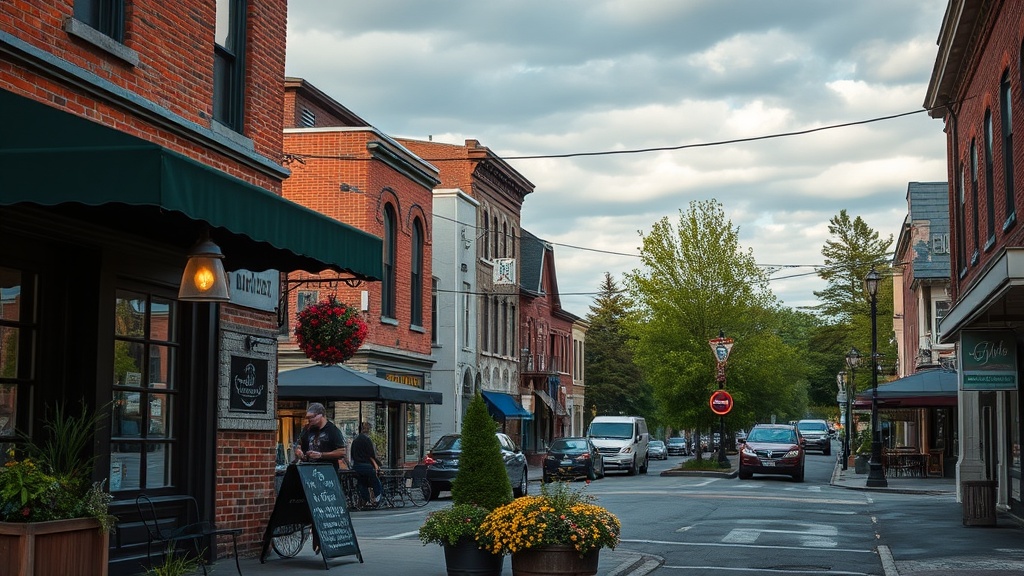
How to Explore Downtown Sherbrooke's Hidden Gems Like a Local

Downtown Sherbrooke rewards those who look beyond the obvious. This guide maps out the overlooked bookstores, alleyway murals, family-run restaurants, and quiet viewpoints that locals frequent—but tourists rarely find. Whether you're a new resident wanting to feel like a local or a visitor seeking authentic experiences beyond the tourist trail, these practical tips will help you discover what makes Sherbrooke's core genuinely special.
Where Can You Find the Best Hidden Cafés in Downtown Sherbrooke?
The best hidden cafés sit above street level or tucked into converted heritage buildings, away from the main pedestrian thoroughfares.
Café Plaisirs Gourmands occupies a narrow space on Rue Wellington Nord that most pedestrians walk past without noticing. The entrance—just a single door between a vintage clothing shop and a law office—leads upstairs to a sunlit room with exposed brick and mismatched furniture. They roast their own beans (sourced through Équiterre-supported fair trade networks) and serve what many locals consider the best cortado in the city. Arrive before 9 AM on weekends or expect to stand.
Here's the thing about Sherbrooke's café scene: the good spots don't advertise aggressively. La Brûlerie Faro hides in plain sight on Rue King Ouest, but the real gem is their back patio—a walled courtyard accessible only through the roasting room. That patio opens in May and closes in October, weather depending. Worth noting: they don't allow laptops on weekends, which keeps the atmosphere genuinely social.
For something completely different, Café Entre Deux operates out of a converted Victorian house on Rue Marquette. The front room functions as a co-working space (day passes available), but the side porch—complete with wicker chairs and a view of the Magog River rapids—serves coffee to anyone who asks. It's rarely crowded before noon.
| Café | Best For | Hidden Feature | Price Range |
|---|---|---|---|
| Café Plaisirs Gourmands | Espresso drinks | Upstairs sunroom | $3–$6 |
| La Brûlerie Faro | Pour-over | Walled back patio | $2.50–$5.50 |
| Café Entre Deux | Remote work | Riverside porch | $3–$7 |
| Le Café Sherlock | Hot chocolate | Basement reading room | $4–$8 |
What Local Markets and Shops Should You Visit?
Skip the chain stores on Rue King and head to the Marché de la Gare and the surrounding independent shops that cluster near the old train station.
The Marché de la Gare (officially Marché municipal de Sherbrooke) operates year-round, though the outdoor section shrinks dramatically in winter. Inside the permanent building, you'll find Fromagerie La Grappe d'Or—a cheese shop that stocks exclusively Quebec producers, including several from the Eastern Townships. Ask for the Oka aged by the monks at Abbaye d'Oka or the raw-milk Bleu d'Élizabeth from nearby Compton. The owner, Michel, worked at the abbeys for twelve years before opening this shop. He remembers regulars and will let you sample anything.
That said, the real discoveries happen in the adjacent streets. Librairie l'Insoumise on Rue Dufferin specializes in used books—particularly Quebec literature and local history. The basement holds a disorganized treasure of out-of-print titles about Sherbrooke's industrial past. Don't expect a computerized inventory; the owner, a retired professor, knows where everything lives. Dig through the boxes near the staircase.
For food without the market crowds, Épicerie Fine Gourmande on Rue Belvédère Sud carries products from over forty local producers. Their house-made tourtière (available frozen or hot, depending on the day) uses a recipe passed down through three generations of the owner's family. The catch? They only make twenty pies per week. Call ahead if you're making a special trip.
How Do You Navigate Sherbrooke's Street Art and Alleys?
The most interesting murals and installations occupy alleyways connecting major streets—particularly between Rue Wellington and Rue King.
Sherbrooke's MURALE festival (Murales Urbaines du Relief Artistique et Littéraire de l'Estrie) has transformed dozens of downtown walls since 2015. Unlike Montreal's famous murals, which tend toward massive single images, Sherbrooke's street art often works with the architecture—wrapping around corners, incorporating windows, and responding to the building's history. The festival's website maintains an updated map, but the paper copies available at the tourist office on Rue Dufferin mark several unlisted pieces.
Start at the corner of Rue Wellington and Rue Dufferin. The alley running west connects to a series of interconnected parking-lot walls painted by international artists during the 2019 and 2021 festivals. Reaching for the Stars by Belgian artist Roa features massive black-and-white animals native to the region—a moose, a black bear, a pileated woodpecker—rendered in his distinctive anatomical style. The piece wraps around three sides of a building and only reveals itself fully when approached from the correct angle.
Continue toward the Magog River. The underpass at Rue Frontenac contains a sound installation (easy to miss if there's traffic) that plays recordings of local birds and flowing water. It's subtle—many locals walk through daily without noticing. Worth your time if you're interested in how cities integrate art into infrastructure.
The back alleys between Rue King and Rue Wellington also hide practical shortcuts. The passage connecting Rue Belvédère to Rue Commercial cuts what looks like a fifteen-minute walk down to seven minutes. These routes aren't secrets, exactly, but they rarely appear on tourist maps. Watch for the blue "Raccourci Piéton" signs.
Where Do Locals Actually Eat?
Locals avoid the restaurants with bilingual menus displayed on sandwich boards outside. The good food lives in basement locations, upstairs dining rooms, and family operations without websites.
Restaurant L'Entrecôte Saint-Jean has occupied the same basement location on Rue Belvédère since 1987. The entrance—a narrow staircase descending between two storefronts—intentionally discourages casual walk-ins. They serve one thing: steak frites with their house sauce. The recipe remains a family secret. The restaurant doesn't take reservations for fewer than four people, so arrive at 5:30 PM or prepare to wait on the stairs.
For something lighter, Le Boq Gourmand on Rue Wellington operates as a daytime café and evening bistro. The chef sources vegetables from the Équiterre network of organic farms and changes the menu based on what's available. The building—a converted 1920s bank—retains the original vault door, now used as the entrance to the washrooms. It's gimmicky, sure, but the food justifies the architecture. Try the tartare if they have it; the kitchen handles raw preparations with unusual precision.
Vegetarians and vegans often struggle in Sherbrooke. La Boîte à Lunch solves this problem. Located in a converted house on Rue Marquette, they serve plant-based versions of Quebec comfort food—tourtière made with mushrooms and lentils, poutine with cashew-based sauce. The dining room seats maybe twenty people. They don't advertise; customers find them through word-of-mouth or by noticing the chalkboard on the sidewalk.
Here's the thing about dining downtown: many excellent places close Sunday and Monday. Always check hours before making plans. Several restaurants also shut for two weeks in late July when the owners take their own vacations.
What About the Practical Details?
Parking frustrates visitors more than almost anything else about downtown Sherbrooke. The solution: park once and walk.
The Parking Du Centre-Ville (entrance on Rue Frontenac) offers reasonable daily rates and puts you within five minutes of everything mentioned in this guide. Street parking exists but requires close attention to signs—regulations change based on snow removal schedules, construction, and events at the Théâtre Granada. The city maintains a real-time parking app called Stationnement Sherbrooke that shows available spaces, though the data isn't always perfectly updated.
Public transit works reasonably well for downtown exploration. The S.T.S. (Société de transport de Sherbrooke) bus terminal sits at the corner of Rue King and Rue Belvédère. Routes 2, 4, and 7 serve the downtown core every fifteen minutes on weekdays. A day pass costs $6 and covers unlimited rides—worth it if you're staying outside the central area.
The best time to explore? Tuesday through Thursday, mid-morning to early afternoon. The streets feel alive but not crowded. Weekend mornings work well too, though some businesses (particularly restaurants) open later on Saturdays and Sundays.
Weather shapes the downtown experience more than most visitors expect. Sherbrooke receives significant snow from November through April, and the city maintains an aggressive snow removal schedule. During removal operations (usually 7 PM to 7 AM), cars parked on designated streets get towed immediately. The temporary parking bans rotate; watch for orange signs or check the city's website. This isn't a suggestion—towing fees exceed $150, and the impound lot sits outside the city center.
Finally: bring cash. Not everywhere accepts it, but enough excellent places don't take cards that you'll want options. The ATM at the Jean Coutu on Rue King charges lower fees than the machines inside most dépanneurs.
Downtown Sherbrooke doesn't reveal itself immediately. The best experiences require patience, a willingness to look up and down (not just straight ahead), and the good sense to follow locals when they disappear through unmarked doors. Start with coffee, walk until hungry, then trust the basement restaurants. That's how the city works.
Steps
- 1
Start your morning at Marché de la Gare for local flavours
- 2
Wander through the Murals Trail and hidden alleyways
- 3
End your day at Jacques-Cartier Park for sunset views