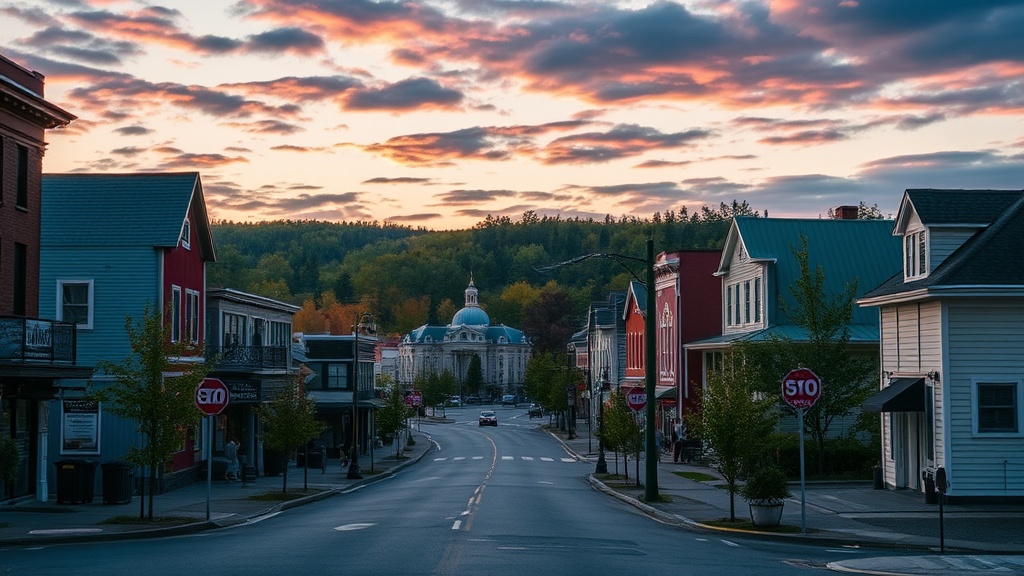
Exploring Sherbrooke: A Local's Guide to Eastern Townships Charm

This guide breaks down exactly what makes Sherbrooke worth your time—whether you're planning a weekend getaway, considering a move, or just passing through the Eastern Townships. You'll find practical details on neighborhoods, food, outdoor spots, and local quirks that only someone who actually lives here would know. No fluff. Just what you need to experience the city properly.
What is Sherbrooke known for?
Sherbrooke is the economic and cultural hub of Quebec's Eastern Townships (Estrie), sitting at the confluence of the Saint-François and Magog rivers. It's a university town—home to Université de Sherbrooke and Bishop's University—that somehow maintains a small-city feel despite having over 170,000 people in the greater area.
The city's identity is split. There's the historic downtown with its red-brick buildings and old factories converted into lofts. Then there's the sprawling campus zones, the outdoor trails, and the French-English bilingualism that defines daily life. You'll hear both languages everywhere—at the grocery store, in cafes, on the street. That duality isn't just historical; it's present, alive, and part of what makes the place interesting.
Here's the thing about Sherbrooke: it doesn't try to be Montreal or Quebec City. It doesn't have the tourist infrastructure of those places, which means you'll need to do a bit more digging. But that's also the point. The good stuff here—the hiking trails without crowds, the restaurants where locals actually eat, the hidden swimming spots—isn't handed to you on a postcard.
Where should you stay in Sherbrooke?
Your choice depends on what you're after. Downtown puts you walking distance to restaurants, the Musée des beaux-arts de Sherbrooke, and the riverside paths. It's practical. But it's not the only option.
Le Montagnard (downtown) offers boutique rooms in a renovated building on Wellington Street. Clean, modern, and you're steps from Microbrasserie Siboire if you want a decent beer after walking around.
Hôtel Le Président sits closer to the Université de Sherbrooke campus. It's chain-hotel reliable—nothing fancy, but parking is easy and the rates don't spike randomly.
For something different, look at options in Lennoxville (technically part of Sherbrooke but feels distinct). It's quieter, more residential, and you're near Bishop's University. The Auberge Ayer's Cliff is technically outside city limits but worth the 15-minute drive if you want lake views and a more resort-like experience.
The catch? Sherbrooke isn't huge. You can stay almost anywhere and drive to the other side in 20 minutes. So don't overthink it. Pick based on vibe and parking availability.
What are the best things to do in Sherbrooke?
You've got options ranging from "stroll and coffee" to "hike all day." Here's how they break down.
Outdoor Activities
Lac des Nations is the obvious starting point. The 3.5-kilometer loop around the lake is flat, paved, and perfect for a morning walk or run. You'll pass the city's waterfront district, benches, and in summer, actual sand beaches where people swim.
Parc du Mont-Orford is 20 minutes north and non-negotiable if you like hiking or skiing. Fall foliage here is ridiculous—maples and birches turning the hills into a paint palette. In winter, it's downhill skiing and cross-country trails. In summer, you hike up to the summit for views that stretch to Vermont on clear days.
Bois Beckett is less known but arguably more interesting. It's an old-growth forest—rare in this part of Quebec—preserved within city limits. The trails are well-marked, not crowded, and there's something humbling about walking among 200-year-old trees while hearing traffic in the distance.
Cultural Spots
The Musée des beaux-arts de Sherbrooke punches above its weight. Small, well-curated, and focused on regional artists alongside bigger names. Admission is reasonable, and the building itself—a converted church—is worth seeing.
Domaine Howard is a 77-hectare park with an English garden layout, a bandstand, and in winter, an outdoor skating rink that's free to use. It's where families go on Sundays. Where teenagers have their first dates. Where you can sit on a bench and actually hear birds instead of traffic.
Marché de la Gare (the old train station market) runs year-round but hits its stride from May through October. Local producers, cheese makers, and the occasional craft vendor. The building itself dates to 1896, and while it's been renovated, you still get that sense of industrial heritage.
| Activity | Best Season | Cost | Why Bother |
|---|---|---|---|
| Lac des Nations loop | Year-round | Free | Easy exercise, people watching |
| Mont-Orford hiking | May–October | $10.50 park entry | Views, actual wilderness |
| Bois Beckett | Year-round | Free | Old-growth forest, quiet |
| Marché de la Gare | May–October (peak) | Free to browse | Local food, atmosphere |
| Musée des beaux-arts | Year-round | $10–$15 | Regional art, air conditioning |
Where should you eat and drink?
Sherbrooke's food scene won't compete with Montreal's—and it doesn't try to. What you get instead is solid, unpretentious cooking at prices that don't require a spreadsheet.
Microbrasserie Siboire has three locations now, but the original on Wellington Street is still the best. They brew on-site—try the Blanche du Bois Beckett, a Belgian-style witbier named after that old-growth forest. The food is pub fare done right: burgers, tartares, and a poutine that locals will defend aggressively.
Le Cellier du Roi is where you go when someone else is paying. It's in the old train station building, which gives it atmosphere the food doesn't always earn—but when they nail it, the regional ingredients (duck, local cheeses, maple) shine.
For breakfast, Café+ on Rue King Est is reliable. Good coffee, decent pastries, and a patio that's usable for about four months of the year (this is Quebec—temper your expectations).
Worth noting: the "best" poutine in Sherbrooke is a matter of serious local debate. Fromagerie La Station (technically in Compton, 30 minutes away) makes cheese that's used in restaurants throughout the region. If you see Compton cheese on a menu, order it.
The Coffee Situation
It's improving. Café Auguste roasts their own beans and takes the craft seriously—maybe too seriously, depending on your patience for pour-over explanations. Café Dépôt is the local chain; it's everywhere, it's consistent, and it's fine.
That said, Sherbrooke isn't a third-wave coffee city. If you need your morning fix to be transcendent, bring an Aeropress.
Is Sherbrooke expensive to visit?
No. Compared to Montreal, Quebec City, or anywhere in Ontario, Sherbrooke is cheap. Hotel rooms run 30–40% less. Restaurant meals are reasonable. Parking is either free or close to it.
Gas is cheaper than in Montreal (provincial tax differences). Groceries are standard Quebec pricing—so, cheaper than Toronto or Vancouver, more expensive than rural New Brunswick.
The real costs are transportation and timing. You'll need a car to do Sherbrooke properly. Public transit exists (STS buses) but it's designed for commuters, not tourists. If you're staying downtown and only walking around Lac des Nations, you can manage without wheels. But to hit Mont-Orford, the wineries in the surrounding countryside, or even some of the better restaurants, you'll want to drive.
Here's the thing about timing: fall foliage season (late September through mid-October) sees prices spike and availability drop. Book early. Winter (January through March) is dead—cheapest rates, but some restaurants close and outdoor activities require proper cold-weather gear.
What about the language situation?
You'll get by in English. Especially downtown, especially in tourist-facing businesses. But Sherbrooke is majority Francophone—about 90% of residents speak French at home. Making an effort (bonjour, merci, excusez-moi) goes further here than in Montreal, where English dominance is more accepted.
The universities mean there's a significant English-speaking population, particularly in Lennoxville. Street signs are bilingual. Menus usually are too. But if you're looking for authentic local experience—talking to the guy selling maple syrup at the market, asking for hiking trail recommendations—you'll hit limits if you only speak English.
Worth noting: the accent here is different from Montreal French. Closer to international French, less slang-heavy, with some regional quirks borrowed from New England (there's a lot of cross-border history in the Eastern Townships).
Practical Tips for Getting Around
- Driving: Downtown parking meters run until 6 PM weekdays, free on Sundays. The parallel streets (Belvédère, Frontenac) are easier than main arteries.
- Cycling: The city has bike lanes, but they're inconsistent. The Route Verte network connects Sherbrooke to Magog and beyond—paved, separated, and genuinely pleasant.
- Weather: Humid summers (July averages 25°C but feels hotter). Cold, snowy winters (January averages -10°C, often much colder). Spring is mud season. Fall is perfect.
- Cell service: Solid throughout the city. Spotty in the hills around Mont-Orford.
If you're driving from Montreal, take Highway 10 east. It's 150 kilometers, about 90 minutes without traffic. From Quebec City, it's longer—roughly 230 kilometers via Highway 20 west and 55 south. Vermont is close: the border at Stanstead is 40 minutes southeast, and Derby Line (the famous library that straddles the border) is worth a detour if you're interested in that kind of thing.
"Sherbrooke isn't trying to impress you. That's exactly why it's worth visiting."
The city rewards patience. It doesn't announce itself. Walk the streets, sit in the parks, eat the cheese, drink the beer brewed three blocks away. You'll find that Eastern Townships charm everyone talks about—not in a single moment, but in the accumulation of small details. The way the light hits the brick buildings at 5 PM. The accent of the server who remembers your coffee order. The trail that starts at the edge of town and keeps going until you forget you're near anything at all.